ALERT: Stay vigilant and exercise caution against online scams. Never share confidential information, passwords, OTPs and bank details over calls, emails or SMSes.
An Attack Surface Assessment is a comprehensive analysis that identifies all the digital entry points of your organisation through your public website. This includes everything from exposed web applications to forgotten websites and cloud services. These assessments help uncover how accessible your systems are to potential attackers and offer insights into weaknesses that might otherwise go unnoticed, including outdated software, insecure web services , and more.
This email looks like a run-of-the-mill notification from a supplier. But it’s how one firm nearly lost SGD300,000 in 2025. What happened? An unsuspecting employee forgot to verify the sender.
A business’s digital footprint includes everything that exists online under its name or domain. This ranges from obvious elements like websites, subdomains, and company accounts to less visible assets such as SaaS tools, cloud services, employee logins, and vendor platforms. Even third-party tools connected to your systems or legacy infrastructure you’ve stopped using can still leave traces online. All of this forms part of what an attacker could potentially see and exploit.
Business leaders often think they’ve covered the basics, but in today’s world, assuming you’re secure could be your biggest mistake. Complacency is the ultimate welcome mat for hackers so let’s unpack some cybersecurity basics that SMEs often overlook, and discover how consultants can help protect your business.
2025 has been a year of acceleration, not just innovation. Rather than introducing completely new technologies, much of the focus has been on taking existing tools, such as generative AI, wireless connectivity, and cybersecurity, and refining them into practical, scalable solutions for real-world use.
In today’s fast-moving digital landscape, many companies, especially SMEs, turn to outsourced IT vendors to manage their infrastructure. It's a cost-effective solution, and for businesses without in-house technical expertise, it offers immediate relief. However, while outsourcing can offer short-term convenience, it can also introduce long-term vulnerabilities especially when the chosen vendor lacks the stability, scale, or service quality to support a growing business. For companies already engaged with a third-party IT provider, making a switch feels daunting, but clinging to an unreliable partner could be a bigger risk.
Picture this: You’re at home and you urgently need a file, but it’s sitting in a thumb drive on your desk at the office. Or, the computers are down but your IT specialist is on leave. That’s the daily reality for businesses who are still tied to physical hardware.
While big brands like Uber and Delta airlines have embraced cloud communication, many SMEs in Singapore are just starting to discover how cloud-based calling can transform the way they work.
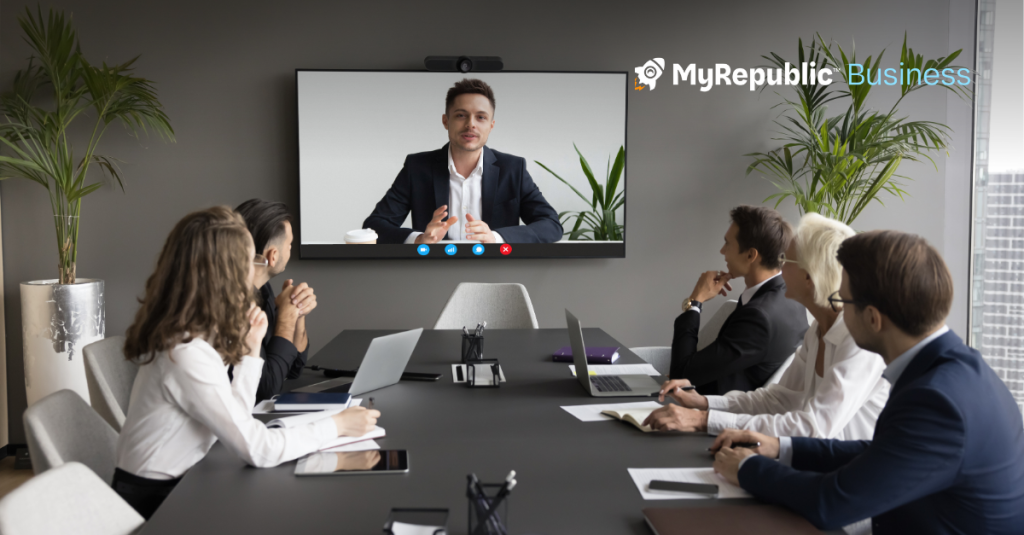
Effective communication is the backbone of any successful business, especially for SMEs where every team member plays a crucial role. With hybrid and remote work becoming the norm, traditional phone systems often fall short in supporting dynamic teamwork. That’s where team calling solutions come in. These solutions are specially designed to help businesses improve collaboration, streamline workflows, and stay connected no matter where employees are.
In Singapore’s thriving Meetings, Incentives, Conferences, and Exhibitions (MICE) industry, world-class infrastructure meets world-class expectations. This same demand for high-performance connectivity extends to tech industry meetings, product launches with live demos, gaming and Esports competitions. Across sectors, fast, stable, and secure internet is essential to deliver seamless, real-time experiences without lag, dropouts, or downtime.
Cybersecurity isn’t just a concern for big corporations anymore. In fact, SMEs in Singapore are becoming increasingly attractive targets for cybercriminals due to limited resources and less sophisticated security measures.
The technology industry is undergoing rapid consolidation, and VMware’s recent acquisition by Broadcom marks one of the most significant shifts in enterprise IT infrastructure in recent years. For many businesses, VMware has long been a cornerstone for virtualisation, private cloud, and hybrid cloud solutions. These changes have introduced unexpected challenges, making what was once a dependable virtualisation platform a source of uncertainty.
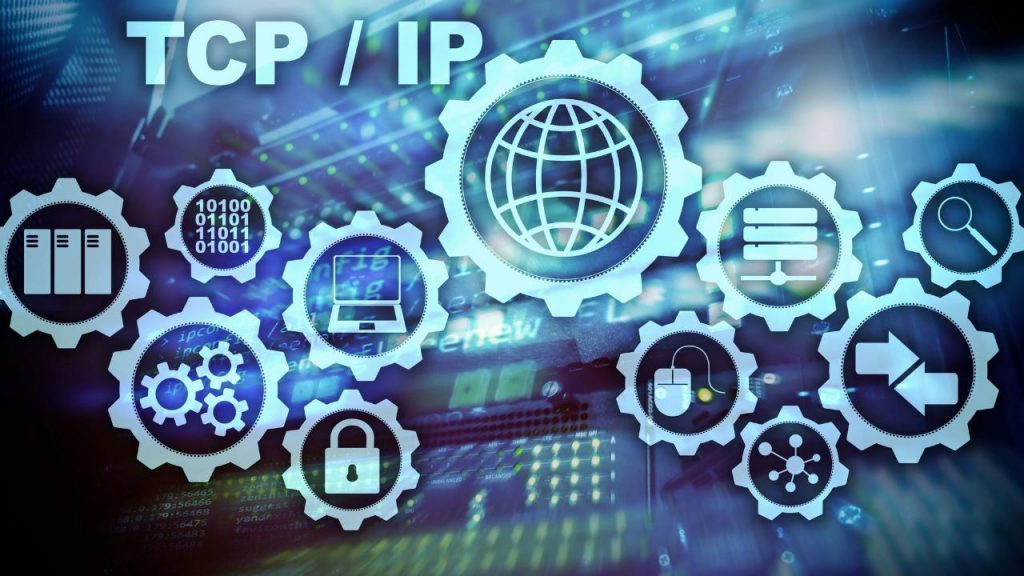
Internet Protocol (IP) addresses connect your network to the Internet. IP addresses come in two varieties: static and dynamic. To help you choose between static and dynamic IP addresses, this article compares their main characteristics.
With Singapore’s extended circuit breaker in place, it may be the first time in many years that your business has had to close for an extended period. This has serious implications for many businesses, who need to manage lost revenue and decreased footfall in the face of still-rolling costs, and much more. For some businesses out there, this creates severe cashflow setbacks that could make or break the company.
On average, businesses in the region experienced 1,835 cyberthreats a week in the first quarter of 2023. That statistic alone should be cause for concern, and as a business owner, you need to ensure that your networks are protected 24/7. The question is, to what degree? Introducing Managed Cybersecurity, today's solution to a landscape rife with cyberthreats.
There’s always something inspiring about the start of a new year. For many, it’s synonymous with fresh starts and resolutions; a time for people to visualise their goals and outline steps to achieve them.
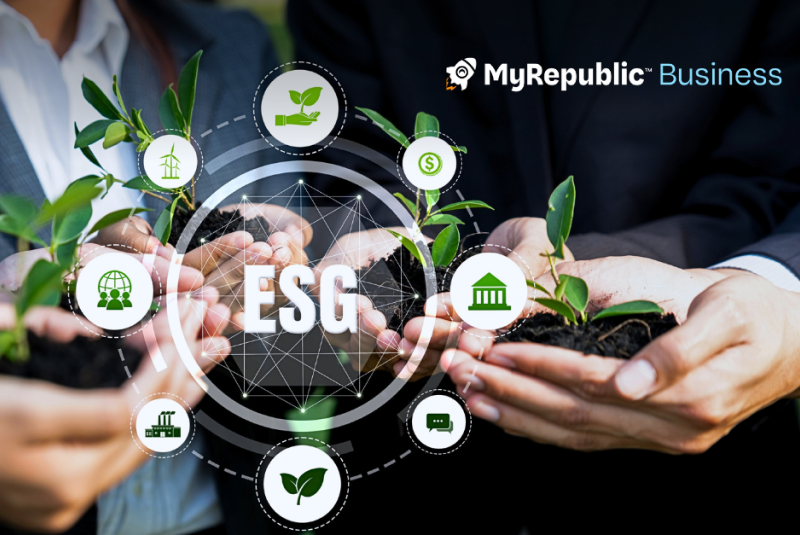
11th November marked the beginning of the 2024 United Nations Climate Change Conference (COP 29), where global leaders convened to reaffirm their commitment to battling climate change. As climate change becomes more evident, prioritising sustainability has risen to the forefront of global agendas. Governments worldwide are enacting stringent measures to reduce national carbon footprints and greenhouse gas emissions, and businesses are now held to the same level of accountability.
Choppy calls, laggy video, and audio glitches force you to repeat yourself endlessly to make your point heard. Does this scenario sound painfully familiar to you? If so, you're not alone. While most of us have come to rely on our laptops and work devices for quick one-on-one calls, they simply don’t cut it when it comes to larger conference meetings. Your business and teams deserve more than that in today's fast-paced work environment.
Ask any parent with a newborn and they’ll tell you that a good night’s sleep is hard to come by. Plagued by constant worrying and fretting over what might go wrong, it’s near impossible to get any shut-eye. The situation is much the same for retailers and small business owners, except their baby is the business they’ve worked so hard to develop – one that presents just as much worry and demands an equal amount of attention and care.
According to a recent article by Forbes, digital transformation has swiftly become a driving force behind business growth across industries. The increasing reliance on digital tools and automation has allowed businesses to optimise operations, enhance productivity, and ultimately drive revenue. Technology, in this context, isn’t just a supplementary asset – it’s a foundational element that can elevate a company’s competitive edge in an ever-evolving marketplace.
As businesses in Singapore strive to stay competitive, innovate, and manage costs effectively, strategic IT sourcing has emerged as a key component of their planning process. By outsourcing key IT functions, companies can minimise the total cost of ownership for IT investments and stay agile in the face of rapid technological advancements. In this article, we will explore the advantages of IT outsourcing services.
Home to 4,500 start-ups and growing , Singapore has quickly established itself as the region's de facto headquarters for entrepreneurship. Despite the island nation’s modest size and population, Singapore’s beneficial economic policies and strategic location have made it the perfect environment for businesses making their first foray into the marketplace.
As technology becomes increasingly embedded in business operations, organisations face heightened exposure to a variety of cyber threats, such as unauthorised access and malicious attacks. Cybercriminals are evolving their tactics and exploiting vulnerabilities, prompting businesses to prioritise robust cybersecurity. In this article, we'll explore different types of cybersecurity measures and the latest trends shaping the industry in 2024.
Has this ever happened to you? You’re a nice hire, eager to hit the ground running and start making a difference in your role, only to find yourself waiting days or even weeks for a work device to be assigned. You make do with the standard office equipment but you’re frustrated because you don’t have a dedicated laptop that you can use on the go, or even bring home. Each day that goes by without the right equipment feels like a day of lost productivity and stalled momentum.
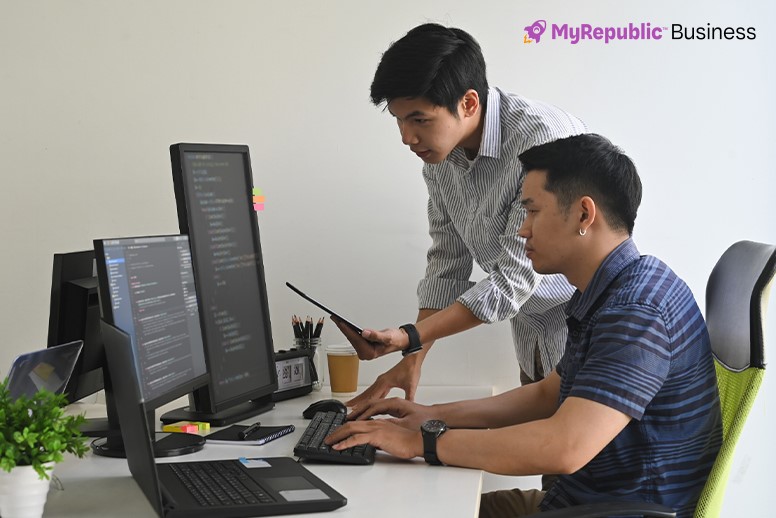
IT investments are crucial for SMEs looking to keep up with rapid changes in technology and consumer expectations. From digital transformation initiatives to streamlining day-to-day operations, IT solutions can be a major competitive advantage for SMEs.
Cybersecurity has become a crucial concern for businesses of all sizes in Singapore and worldwide. However, small and medium-sized enterprises (SMEs) are often seen as particularly vulnerable to cyber threats.
Curious how MyRepublic Business can benefit your organisation?
Get in touch with us.
For sales enquiries, drop us a call at +65 6430 0887 (weekdays 9:00am – 6:00pm). Alternatively, fill out the contact form on the right and we’ll respond within three business days.