ALERT: Stay vigilant and exercise caution against online scams. Never share confidential information, passwords, OTPs and bank details over calls, emails or SMSes.
Most businesses already rely on software to get work done. Sales systems, finance platforms, customer support tools, and internal dashboards all need to stay aligned.
Email remains one of the most common entry points for cyberattacks. From phishing emails to ransomware attacks and business email compromise (BEC), threats continue to target organisations of all sizes.
The legal industry is evolving, and digital transformation is changing how law firms operate. From managing sensitive case files to enabling secure remote work, firms today face a balancing act. How can you ensure client confidentiality is protected, while still improving operational efficiency.
AI tools are already widely used across businesses. According to a recent McKinsey survey, nearly nine in ten organisations use AI in at least one business function. That tells us two things. AI is no longer experimental, and many teams are already experiencing the operational impact.
Video conferencing is now part of day-to-day work for many organisations. As teams collaborate across locations and time zones, video meetings have become a way to stay connected. Up until 2025, 83% of larger companies and 27,6% of small businesses plan to invest in collaboration tools, showing just how video has become a standard part of business communication.
Launching your first business website is an exciting milestone. To make a strong first impression online, you’ll want to make sure your site checks all the right boxes before going live. Beyond looking good, your website needs to be fast, mobile-friendly, secure, and easy to find on search engines. You’ll also need to think about tools like domain names, hosting, analytics, and content management systems (CMS) to get up and running.
When Netflix takes forever to buffer, and online work meetings keep getting disconnected, it can be tempting to lay all the blame on your internet service. However, the real culprit could actually be something closer to home.
When so much depends on the cloud, a fast and reliable internet connection matters more than ever. Speed, available bandwidth, and stability directly affect how well these tools perform. As cloud usage grows, internet connections that were not designed for high-concurrency, cloud-centric workloads can become performance bottlenecks, particularly when multiple users, systems, and customers access cloud applications simultaneously.
Now that remote and hybrid work arrangements are here to stay, managing company laptops has become an extra time and money sink. Instead of spending time on core tasks, you find yourself spending hours looking up device specifications, arranging deliveries, and worrying about proper e-waste disposal.
Your emails and DMs are overflowing with customer inquiries, and your team is busy digging through the latest leads one by one. You catch yourself wondering if there’s a better way to do this.
Across Singapore, SMEs are changing how they work, operate, and deliver value. As businesses move deeper into the digital age, uninterrupted connectivity has become the foundation of daily operations. A secure and reliable network helps teams collaborate more effectively and maintain consistent performance across different work environments.
Today, every click, call, and customer interaction depends on connection. From classrooms to clinics, staying online means staying operational. For many businesses, the network isn’t just part of the workflow. It is the workflow.
In the modern era of digital technology, internet connectivity has evolved into a basic necessity for business operations. Whether it’s providing internet access for workstations in the office, cloud solutions for on-site technologies, or simply facilitating communication through VoIP calls, nearly every essential business function in the 21st century requires internet connectivity in some form.
Ask business owners operating in the Food and Beverage (F&B) or Retail industry and they’ll tell you how competitive and busy business can get. Increasing operational costs, tight profit margins and quicker demands have pushed businesses to rely heavily on technology and digital point-of-sale (POS) systems for their daily operations. As a result, having efficient and seamless connectivity to support these technologies and digital platforms has become a fundamental requirement for businesses functioning in these industries.
Given the myriad of service providers and different plans on the market, picking the best connectivity plan for your business can be a tough decision. The questions that probably come to mind immediately when debating between connectivity plans is "What is the difference between business and consumer plans? Does it matter for my business operations?” These are especially true questions amongst younger businesses that are still starting, and might not view business plans as necessary.
In an increasingly tech-enabled world, connectivity is essential for any business and event. With so many options available, how does one select the right Internet Service Provider (ISP) for all their event needs? If you’re debating over Internet Service Providers for your event, you may consider these key factors.
The Internet of Things (IoT) is revolutionising the way businesses operate. Encompassing a vast network of interconnected physical devices, from vehicles to buildings, IoT-equipped devices come with advanced sensors and software. Dive in as we unveil how IoT integration can turbocharge business operations and efficiency.
In our fast-paced business world, streamlined communication is not just a luxury – it is a necessity. Effective communication ensures information reaches its intended recipients promptly, allowing businesses to stay agile and competitive. Unified communication solutions facilitate this by integrating various communication tools like email, voice, messaging, and video conferencing into a single platform. Let's explore the transformative power of unified communication solutions on business dynamics.
Reliable high-speed internet has now become a necessity, especially for businesses. It underpins crucial functions like video conferencing, real-time communication, and global networking. In this digital landscape, businesses often weigh two primary options: business broadband and leased line services. While both deliver high-speed internet, they differ in terms of reliability, speed, and cost. In this article, we explore these distinctions, empowering you to make an informed choice that aligns with your specific business requirements.
In today’s digital era, businesses heavily rely on network connectivity for seamless communication and uninterrupted operations. This is where network redundancy comes in handy. Network redundancy refers to the practice of creating multiple paths for network traffic to travel, safeguarding businesses’ operations in the face of potential network disruptions. This article will highlight the importance of network redundancy for businesses, while sharing practical tips on how to implement it effectively.
Today, digital transformation has become a key driver for companies to succeed in our highly competitive business world. With a need to meet the growing expectations of customers and stand out from rivals, organisations are now turning to digital technologies for greater efficiency and streamlined operations. In this article, we will uncover the role of digital transformation in business internet, based on the three crucial aspects below.
Whether you own a small business or run a large enterprise, a fast, reliable, and secure WiFi solution can be an invaluable asset, helping you thrive in today’s digital era. The right-managed WiFi refers to a type of networking solution that offers wireless connectivity and management services for businesses. They are designed to meet specific needs including capacity, coverage, security and management features. We understand that choosing the right WiFi solution can be a challenge, especially for first timers. As such, we have developed a guide here to help ease the selection process.
As technology is becoming more advanced, the internet has also simultaneously revolutionised the way we live and work. With high responsiveness and timeliness being prioritised in today’s digital era, the effectiveness of internet solutions has been constantly improving to pose a profound impact on different business sectors. In this article, we will take a deep-dive into how effective internet solutions can benefit the following industries.
In today’s digital age, timeliness and responsiveness have become a necessity for businesses, making fast and reliable internet an integral component of business productivity. Whether it is remote work, communication or collaboration, stable internet connectivity can contribute to a business’ competitiveness. In this article, we will take a deep dive into the importance of fast and reliable internet in ensuring business productivity and efficiency, as well as how it can impact business operations.
2025 has been a year of acceleration, not just innovation. Rather than introducing completely new technologies, much of the focus has been on taking existing tools, such as generative AI, wireless connectivity, and cybersecurity, and refining them into practical, scalable solutions for real-world use.
In today’s fast-moving digital landscape, many companies, especially SMEs, turn to outsourced IT vendors to manage their infrastructure. It's a cost-effective solution, and for businesses without in-house technical expertise, it offers immediate relief. However, while outsourcing can offer short-term convenience, it can also introduce long-term vulnerabilities especially when the chosen vendor lacks the stability, scale, or service quality to support a growing business. For companies already engaged with a third-party IT provider, making a switch feels daunting, but clinging to an unreliable partner could be a bigger risk.
Picture this: You’re at home and you urgently need a file, but it’s sitting in a thumb drive on your desk at the office. Or, the computers are down but your IT specialist is on leave. That’s the daily reality for businesses who are still tied to physical hardware.
While big brands like Uber and Delta airlines have embraced cloud communication, many SMEs in Singapore are just starting to discover how cloud-based calling can transform the way they work.
Effective communication is the backbone of any successful business, especially for SMEs where every team member plays a crucial role. With hybrid and remote work becoming the norm, traditional phone systems often fall short in supporting dynamic teamwork. That’s where team calling solutions come in. These solutions are specially designed to help businesses improve collaboration, streamline workflows, and stay connected no matter where employees are.
Cybersecurity isn’t just a concern for big corporations anymore. In fact, SMEs in Singapore are becoming increasingly attractive targets for cybercriminals due to limited resources and less sophisticated security measures.
The technology industry is undergoing rapid consolidation, and VMware’s recent acquisition by Broadcom marks one of the most significant shifts in enterprise IT infrastructure in recent years. For many businesses, VMware has long been a cornerstone for virtualisation, private cloud, and hybrid cloud solutions. These changes have introduced unexpected challenges, making what was once a dependable virtualisation platform a source of uncertainty.
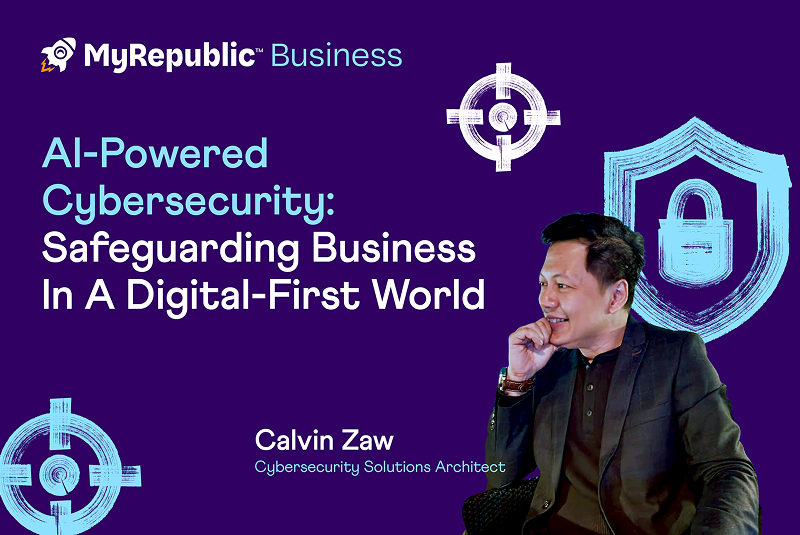
Ask anyone about Artificial Intelligence (AI) and cybersecurity in tandem and chances are they’ll conjure imaginative scenarios of robots threatening global domination. Far removed from the doomsday scenarios of “Skynet” and “The Terminator”, AI has emerged as more of an ally in network security than a threat. But how is AI making the business landscape a safer place for everyone? How can businesses leverage AI tools to protect their critical networks?
Ever had a virtual class drop right in the middle of a lesson because of poor connectivity? Or maybe you’ve had countless experiences struggling to present and share learning materials because your systems can't keep up? For schools, training centres, and online educators, reliable tech can make all the difference between a productive day of learning or one filled with frustration. Breaking through to students and teaching is enough of a challenge, so why let technical difficulties compound your worries?
In Singapore’s competitive business landscape, digital transformation is an essential part of business survival and growth. SMEs in Singapore face dynamic market conditions, and by embracing digital transformation, they can discover new growth opportunities, improve efficiency, and build a foundation for sustained success.
Picture this: you’re running a busy warehouse, juggling incoming shipments, outgoing deliveries, and managing a team on the floor. Then, a pallet goes missing, a delivery delay throws the schedule off, or worse - an accident occurs, halting all work due to safety concerns.
Wise, Revolut, Paypal – what do these names have in common apart from having multibillion-dollar valuations? They're all companies that have made sending money overseas significantly quicker and cheaper. Not too long ago, remitting or sending money internationally entailed exorbitant merchant fees and significant delays. Those days are now over, with the advent of fast-paced and accessible internet connectivity.
Curious how MyRepublic Business can benefit your organisation?
Get in touch with us.
For sales enquiries, drop us a call at +65 6430 0887 (weekdays 9:00am – 6:00pm). Alternatively, fill out the contact form on the right and we’ll respond within three business days.