ALERT: Stay vigilant and exercise caution against online scams. Never share confidential information, passwords, OTPs and bank details over calls, emails or SMSes.
In a highly connected economy like Singapore, customers expect information at their fingertips. Quite literally. We’re accustomed to being able to easily find the information we need, regardless of whether we’re searching for a nearby café, a B2B supplier, or professional services, and most journeys now begin on a smartphone. For SMEs, having a mobile-friendly website is absolutely a business essential.
Cyber threats are increasingly prevalent, from phishing emails to ransomware, but most attacks take advantage of simple, preventable weaknesses. To address this, Cyber Essentials is a government-backed framework of five key technical controls that organisations and businesses can implement to effectively protect themselves against standard cyber threats.
Voice remains one of the most powerful channels for building trust, resolving issues quickly, and creating meaningful customer interactions. Every business already relies on voice, but when phone systems are unmanaged, that experience is often undermined by dropped calls, poor audio quality, and inconsistent service.
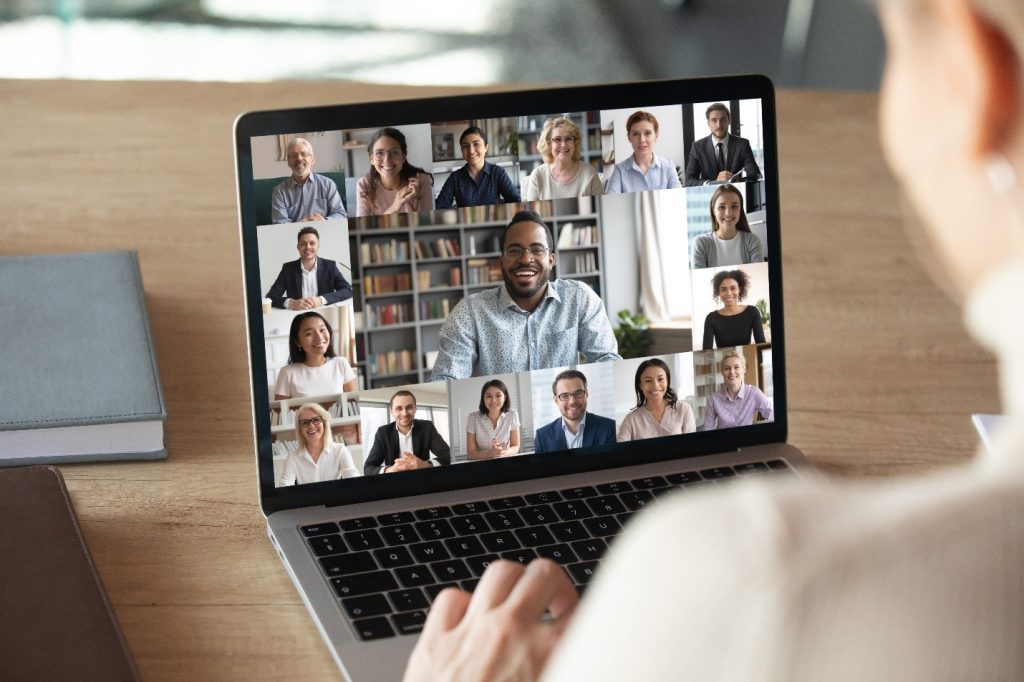
In today’s hybrid work environment, clear and reliable video conferencing is essential for effective collaboration. However, many meeting rooms still struggle with poor audio, limited camera coverage, and outdated equipment that affect the overall meeting experience.
A company's network directly affects productivity. Slow connections interrupt meetings, unstable Wi-Fi disrupts collaboration, and weak security exposes sensitive business data. As businesses increasingly rely on cloud platforms, video conferencing, and digital tools, stable and secure connectivity is a baseline requirement.
As Singapore’s economy continues to grow in 2026, ICT solutions are helping SMEs boost productivity, resilience and competitiveness through connectivity, cloud and digital tools.
Unstable internet can affect everything from communication to daily operations. Video calls become unreliable, shared files take longer to load, and cloud-based tools respond slowly. Over time, these small issues start to affect how work gets done.
If your office internet feels slow, calls keep dropping, or systems disconnect randomly, you may have already tried increasing your bandwidth or even switching internet providers.
Cyber threats are no longer limited to large enterprises. For many small and medium-sized businesses, people are often the first and most exposed point of risk. In Singapore, scams and cybercrime continue to affect organisations of all sizes.
If your business still relies on traditional phone lines, you could be paying more than necessary, especially for international calls. Across Singapore, more companies are moving away from traditional landlines and switching to VoIP services that run on their existing Internet connection.
Most businesses already rely on software to get work done. Sales systems, finance platforms, customer support tools, and internal dashboards all need to stay aligned.
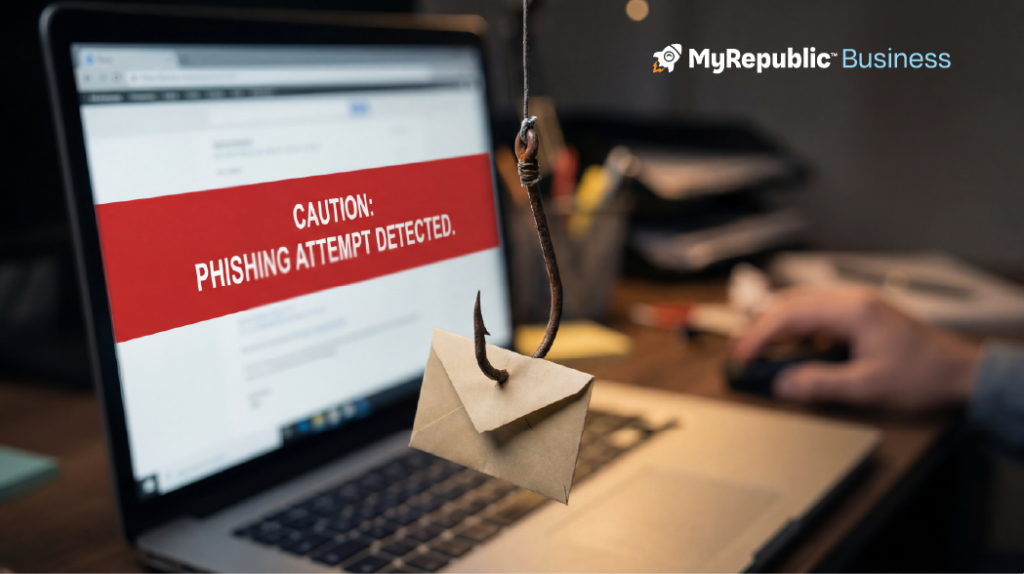
Email remains one of the most common entry points for cyberattacks. From phishing emails to ransomware attacks and business email compromise (BEC), threats continue to target organisations of all sizes.
In Singapore’s thriving Meetings, Incentives, Conferences, and Exhibitions (MICE) industry, world-class infrastructure meets world-class expectations. This same demand for high-performance connectivity extends to tech industry meetings, product launches with live demos, gaming and Esports competitions. Across sectors, fast, stable, and secure internet is essential to deliver seamless, real-time experiences without lag, dropouts, or downtime.
Wi-Fi 7 ushers in a new era of connectivity with its cutting-edge technology, offering improved throughput, enhanced multi-user connectivity, and lower latency—all of which have the potential to revolutionise how businesses operate. We've previously compared Wi-Fi 6 vs Wi-Fi 7 to highlight how these advancements directly impact daily business operations, and showcased real-world applications for various industries.
Wi-Fi 7 is designed to meet the growing demand for faster, more reliable, and secure internet connectivity across diverse industries. This is a game-changer for businesses handling large volumes of data, such as media companies, healthcare institutions, or organizations relying on big data analytics. In this article, we’ll explore the real-world applications and benefits of Wi-Fi 7 for businesses across various sectors.
Understanding the key differences between Wi-Fi 6 and Wi-Fi 7 can be overwhelming, especially with the technical jargon involved. How does Wi-Fi 7 compare to Wi-Fi 6? What benefits does it offer? This article breaks it down in simple terms, showing how upgrading can improve your business.
The final quarter of 2024 looks on the rise for small and medium enterprises (SMEs) in Singapore. Across the board, experts and industry analysts reported positive cash inflows and potential expansions for SMEs nationwide. This lies in the stark contrast to the past five quarters in which the overall economic performance of SMEs has been underwhelming.
1st November 2024 marks the official shutdown of all major 3G networks in Singapore, closing a chapter that has defined mobile communications for over two decades. After an extended sun-setting period, the nation bids farewell to 3G and now fully adopts 4G LTE connectivity as the new standard. This transition isn’t just a routine upgrade – it’s a pivotal move that promises faster, more reliable connections across the country. For businesses, it’s an opportunity to unlock new levels of efficiency, agility, and competitive advantage.
For SMEs in Singapore, whether you're managing a small team or overseeing multiple projects, the right tools can make all the difference. With the vast array of digital tools available today, choosing the right ones can seem overwhelming.
In the early 1980s, the Open System Interconnection (OSI) model was devised to outline the seven layers of network communication. It served as the early model for network communications and paved the way for modern Transmission Control Protocol/Internet Protocol (TCP/IP) systems, which were developed in the 1970s and upon which the 21st-century Internet is founded. Within the OSI model, Layer 2 specifically refers to how data links are set up and defines the data format on each network.
Earlier this year, the Singapore Tourism Board projected that tourism receipts for 2024 would hit a record high of $29 billion. Driven by events like Formula 1 and concerts by star performers such as Taylor Swift, Coldplay, and Ed Sheeran, tourists worldwide continue flocking to local shores in droves. This influx of visitors has also had the added benefit of contributing to Singapore’s gross domestic profit by the way of spending. The biggest beneficiaries? Companies in retail, hospitality and F&B industries.
Powered by high-speed internet access, information in the digital age travels at the speed of light. With the collective knowledge of the human race readily available at our fingertips, productivity’s dependence on quick and responsive connectivity has never been higher. This is especially true for businesses, many of which are undergoing digital transformations to embrace automation and artificial intelligence (AI) to enhance productivity.
Building on the transformative potential of Wi-Fi 7 outlined in our previous article, we now explore its practical applications and the remarkable ways it can enhance our daily digital experiences. From supporting smart homes and optimising remote work environments to revolutionising augmented reality (AR) and virtual reality (VR) gaming, Wi-Fi 7 is poised to substantially enhance connectivity, efficiency, and stability across various domains. This next-generation technology is not just about faster speeds; it’s about creating a seamless and robust digital environment that adapts to our increasingly interconnected lifestyles.
In the modern era of digital technology, internet connectivity has evolved into a basic necessity for business operations. Whether it’s providing internet access for workstations in the office, cloud solutions for on-site technologies, or simply facilitating communication through VoIP calls, nearly every essential business function in the 21st century requires internet connectivity in some form.
In today’s age of connectivity, having a telephony system that fulfils your business needs is vital to success. Selecting the best business phone system solution for your organisation can be difficult, especially if you’re unfamiliar with the current options in the market. Having a good understanding of phone systems and their features is essential to making the right decision.
The telephone has served us well for nearly 150 years. The great strides in telephony innovation have seen us through industrialisation and globalisation. For enterprises, we are now at a point in technology adoption where we may be close to the next phase in telephony innovation – where we might not need legacy phone systems at all.
Most businesses already rely on software to get work done. Sales systems, finance platforms, customer support tools, and internal dashboards all need to stay aligned.
Email remains one of the most common entry points for cyberattacks. From phishing emails to ransomware attacks and business email compromise (BEC), threats continue to target organisations of all sizes.
The legal industry is evolving, and digital transformation is changing how law firms operate. From managing sensitive case files to enabling secure remote work, firms today face a balancing act. How can you ensure client confidentiality is protected, while still improving operational efficiency.
Video conferencing is now part of day-to-day work for many organisations. As teams collaborate across locations and time zones, video meetings have become a way to stay connected. Up until 2025, 83% of larger companies and 27,6% of small businesses plan to invest in collaboration tools, showing just how video has become a standard part of business communication.
Launching your first business website is an exciting milestone. To make a strong first impression online, you’ll want to make sure your site checks all the right boxes before going live. Beyond looking good, your website needs to be fast, mobile-friendly, secure, and easy to find on search engines. You’ll also need to think about tools like domain names, hosting, analytics, and content management systems (CMS) to get up and running.
Now that remote and hybrid work arrangements are here to stay, managing company laptops has become an extra time and money sink. Instead of spending time on core tasks, you find yourself spending hours looking up device specifications, arranging deliveries, and worrying about proper e-waste disposal.
Your emails and DMs are overflowing with customer inquiries, and your team is busy digging through the latest leads one by one. You catch yourself wondering if there’s a better way to do this.
An Attack Surface Assessment is a comprehensive analysis that identifies all the digital entry points of your organisation through your public website. This includes everything from exposed web applications to forgotten websites and cloud services. These assessments help uncover how accessible your systems are to potential attackers and offer insights into weaknesses that might otherwise go unnoticed, including outdated software, insecure web services , and more.
This email looks like a run-of-the-mill notification from a supplier. But it’s how one firm nearly lost SGD300,000 in 2025. What happened? An unsuspecting employee forgot to verify the sender.
A business’s digital footprint includes everything that exists online under its name or domain. This ranges from obvious elements like websites, subdomains, and company accounts to less visible assets such as SaaS tools, cloud services, employee logins, and vendor platforms. Even third-party tools connected to your systems or legacy infrastructure you’ve stopped using can still leave traces online. All of this forms part of what an attacker could potentially see and exploit.
Business leaders often think they’ve covered the basics, but in today’s world, assuming you’re secure could be your biggest mistake. Complacency is the ultimate welcome mat for hackers so let’s unpack some cybersecurity basics that SMEs often overlook, and discover how consultants can help protect your business.
2025 has been a year of acceleration, not just innovation. Rather than introducing completely new technologies, much of the focus has been on taking existing tools, such as generative AI, wireless connectivity, and cybersecurity, and refining them into practical, scalable solutions for real-world use.
Curious how MyRepublic Business can benefit your organisation?
Get in touch with us.
For sales enquiries, drop us a call at +65 6430 0887 (weekdays 9:00am – 6:00pm). Alternatively, fill out the contact form on the right and we’ll respond within three business days.