ALERT: Stay vigilant and exercise caution against online scams. Never share confidential information, passwords, OTPs and bank details over calls, emails or SMSes.
Ask business owners operating in the Food and Beverage (F&B) or Retail industry and they’ll tell you how competitive and busy business can get. Increasing operational costs, tight profit margins and quicker demands have pushed businesses to rely heavily on technology and digital point-of-sale (POS) systems for their daily operations. As a result, having efficient and seamless connectivity to support these technologies and digital platforms has become a fundamental requirement for businesses functioning in these industries.
Given the myriad of service providers and different plans on the market, picking the best connectivity plan for your business can be a tough decision. The questions that probably come to mind immediately when debating between connectivity plans is "What is the difference between business and consumer plans? Does it matter for my business operations?” These are especially true questions amongst younger businesses that are still starting, and might not view business plans as necessary.
Digitalisation has increased the significance of information and introduced new cyber threats that constantly evolve. As such, businesses are now turning to Virtual Private Network (VPN) solutions to safeguard their online presence and sensitive data. This article highlights the role of VPNs in ensuring the confidentiality and integrity of digital communications for businesses.
The question of a cyberattack is not one of "If", but "When". Over a long enough timespan, most organisations will catch the attention of cybercriminals and become the target of a cybersecurity breach. The key is to recognise what to do when it does happen and have the necessary steps put into place to respond to the threat immediately. Don't have an Incident Response Plan (IRP) in place? Here are some simple measures to implement when you find your business face-to-face with a cyberattack.
A Content Delivery Network (CDN) infrastructure comprises strategically positioned servers distributed across various geographical locations to optimise the delivery of digital content. It improves the overall performance of content transmission by reducing latency and the load on single-origin servers. While this infrastructure is essential in supporting business operations, the deployment of ICT tools can help unlock its full potential. This article will delve into some of these tools.
A Content Delivery Network (CDN) infrastructure comprises strategically positioned servers distributed across various geographical locations to optimise the delivery of digital content. It improves the overall performance of content transmission by reducing latency and the load on single-origin servers. While this infrastructure is essential in supporting business operations, the deployment of ICT tools can help unlock its full potential. This article will delve into some of these tools.
Poorly managed phone service can cause businesses to fall victim to cyberattacks such as phishing and data breaches. Voice over Internet Protocol, or VoIP, allow businesses to prevent such attacks. VoIP is a technology that allows voice calls to be made over the Internet instead of traditional phone lines. VoIP converts your voice into digital signals and transmits them over the internet, enabling you to make calls from a computer, VoIP phone, or smartphone.
Voice over Internet Protocol (VoIP) service facilitates voice communication and multimedia sessions over the internet by converting voice signals into digital data packets. It provides convenience to businesses by efficiently scaling their communication infrastructure without the need for extensive physical equipment. With a myriad of VoIP plans available, choosing the most suitable one can be challenging. In this guide, we will explore the factors to consider during the selection process, focusing on the innovative solutions offered by MyRepublic.
Navigating today’s increasingly competitive business landscape can prove to be a huge challenge for businesses seeking to come out on top. To achieve this, businesses must leverage strategic advantages and optimise their workflows to enhance business productivity. Cloud solutions, championed as the 21st century’s efficiency multiplier, offer a transformative approach to achieving more with less.
In an increasingly tech-enabled world, connectivity is essential for any business and event. With so many options available, how does one select the right Internet Service Provider (ISP) for all their event needs? If you’re debating over Internet Service Providers for your event, you may consider these key factors.
A company’s reputation is one of its most valuable assets. A single data breach can irreparably damage trust and tarnish the brand’s image, which can lead to lost customers and revenue. In today’s digital landscape, where cyber-attacks are becoming increasingly prevalent, businesses must take proactive measures to safeguard their reputation and protect their customers’ trust.
Cybersecurity regulations have been evolving rapidly, and businesses face increasing pressure to ensure data protection and maintain compliance. The relentless advancement of technology has introduced new threats and vulnerabilities that require proactive measures and continual adaptation.
Computer networking has become an increasingly important aspect of computing, as it allows users to share files and other resources. In addition, computer networks can provide security for users' data.
In the present day and age, cybersecurity has become one of the most important issues enterprises face. With the advent of new technologies and increasing connectivity, companies are more vulnerable than ever to cyberattacks.
Digital transformation (DX) is challenging enough for corporates with scale-appropriate budgets. The complexity of technology integration, the stakeholder hills to climb, and the constant push-pull between market-driven needs and operational stability make any digital transformation agenda exasperating.
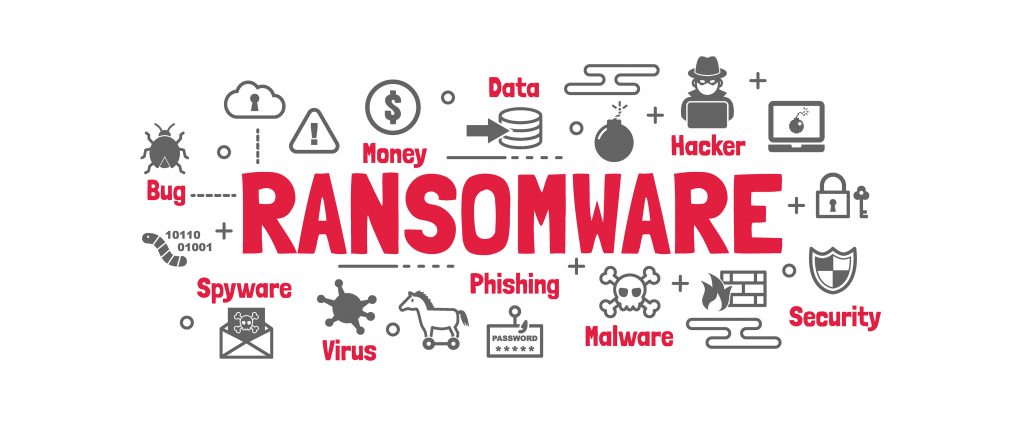
The coronavirus has really done a number on information security infrastructure. As if a public health crisis weren’t enough, threat actors have been taking advantage of sharp changes in IT behaviour and business imperatives to sneak into unsuspecting networks. Ransomware criminals have been around for decades, but the drastic rise in cyber-attacks over the last couple of years is concerning.
A recent Microsoft study indicates that APAC experiences a higher-than-average encounter rate for malware and ransomware attacks – 1.6 and 1.7 times higher respectively than the rest of the world. Regional financial hubs Singapore and Hong Kong recorded the highest drive-by download attack volume in 2019, over 3 times the regional and global average.
Our increasingly digital world is opening up business opportunities like never before. With exponential growth comes an unprecedented transaction volume that inevitably opens up security risks. The Cyber Security Agency of Singapore (CSA) reports that attacks involving ransomware, malicious command &control servers and botnet drones have increased drastically, and phishing, website defacements and cybercrime continue to plague the region.
In a report published in 2019, the Cyber Security Agency (CSA) highlighted 5 major security threats that predominated Singapore’s cyber landscape. Malware, short for malicious software, comprised one of these threats.
With all that’s changing in how businesses work today, how do you make sure that your business is supported by a future-ready Managed Service Provider? The first of a 2-part series, we propose 4 key criteria to keep in mind when you consider Managed Services for your business.
In the second part of our 2-part series on future-ready Managed Services, we dive into what sets ISPs apart when it comes to managing IT solutions at a time when the global workforce is becoming increasingly dispersed.
Curious how MyRepublic Business can benefit your organisation?
Get in touch with us.
For sales enquiries, drop us a call at +65 6430 0887 (weekdays 9:00am – 6:00pm). Alternatively, fill out the contact form on the right and we’ll respond within three business days.