ALERT: Stay vigilant and exercise caution against online scams. Never share confidential information, passwords, OTPs and bank details over calls, emails or SMSes.
Technology has become essential for business growth in today’s fast-paced and competitive market. Gone are the days when only large corporations could benefit from advanced IT systems. Now, even small and medium-sized enterprises (SMEs) can leverage technology to grow, streamline operations, and stay ahead of the competition.
Beating out the US, UK, and even regional neighbours South Korea, Singapore was recently ranked 7th in the world in terms of overall information and communication technology (ICT) development. The results, as depicted in the UN’s International Telecommunication Union 2024 report, offered an empirical analysis of every nation’s level of universal and meaningful connectivity to help determine how well ICT has integrated into each country’s infrastructure.
For SMEs in Singapore, whether you're managing a small team or overseeing multiple projects, the right tools can make all the difference. With the vast array of digital tools available today, choosing the right ones can seem overwhelming.
The world of IT is advancing faster than ever, and SMEs in Singapore have a lot to keep up with. But it's not all about complexity—some of these trends are set to make your life a lot easier, helping you run your business more efficiently and stay ahead of the competition. Here, we break down expert predictions on the future of SME IT solutions into easy-to-digest pieces. Whether you're tech-savvy or just dipping your toes into the digital waters, this guide is for you.
In Singapore, the challenges of operating small-medium enterprises (SMEs) routinely come down to doing more with less. Often lacking the resources that their multi-national counterparts might have, SMEs have to get creative to compete on equal footing. While various government schemes exist to lend SMEs a helping hand, there are also measures that SMEs can take to help maximise their performance.
As the demand for technology grows, it’s increasingly essential for small and medium-sized enterprises (SMEs) to stay agile and informed to remain competitive. The evolution of technology presents both opportunities and challenges, making it crucial for businesses to keep up with the latest IT trends.
As the de-facto productivity enhancer, cloud solutions have become truly indispensable. Adopting the right crowd solutions in today’s business climate has become vital for businesses large and small, with a 2024 study stating that 94% of companies worldwide will utilise some sort of cloud platform as part of their operations on a day-to-day basis. This number has grown since 2020, when only 80% of companies leveraged cloud solutions as part of business workflows.
In line with Singapore’s Digital Enterprise Blueprint (DEB), the Infocomm Media Development Authority (IMDA) has recently launched two new solution categories under the Advanced Digital Solutions (ADS) scheme – Omnichannel Retail Management (OCRM) and Integrated Security Management (ISM). These two schemes are targeted at small and medium-sized enterprises (SMEs) from the retail and security industries and aim to equip SMEs with solutions to deepen their digital capabilities and build business resilience for growth in a digital economy.
Artificial Intelligence (AI) has become increasingly integrated with cybersecurity, both as a threat vector and a means for defence. This was the core message shared at the inaugural Singapore AI Security Summit held by the Association of Information Security Professionals (AiSP) on 3rd July 2024. Attended by stakeholders of the cybersecurity industry, the AI Security Summit served as a gathering of minds for members to discuss the future and outlook of Singapore’s cybersecurity environment in relation to AI.
Within these ads, however, lie wolves in sheeps’ clothing. Armed with nefarious intent, a rising trend of malvertising has emerged where cyber criminals spread malware through digital ads on reputable websites. These ads, which exploit the user’s trust in familiar brands, steal sensitive information by luring victims to deceitful websites and directing them to download malware disguised as harmless content.
In the early 1980s, the Open System Interconnection (OSI) model was devised to outline the seven layers of network communication. It served as the early model for network communications and paved the way for modern Transmission Control Protocol/Internet Protocol (TCP/IP) systems, which were developed in the 1970s and upon which the 21st-century Internet is founded. Within the OSI model, Layer 2 specifically refers to how data links are set up and defines the data format on each network.
In the latest addition to the concerning trend of local cyberattacks, well-known F&B brand Jumbo Group has reportedly fallen victim to a ransomware attack. This marks the second consecutive month a notable Singaporean company has been targeted by cyber criminals.
Digitalisation has increased the significance of information and introduced new cyber threats that constantly evolve. As such, businesses are now turning to Virtual Private Network (VPN) solutions to safeguard their online presence and sensitive data. This article highlights the role of VPNs in ensuring the confidentiality and integrity of digital communications for businesses.
The question of a cyberattack is not one of "If", but "When". Over a long enough timespan, most organisations will catch the attention of cybercriminals and become the target of a cybersecurity breach. The key is to recognise what to do when it does happen and have the necessary steps put into place to respond to the threat immediately. Don't have an Incident Response Plan (IRP) in place? Here are some simple measures to implement when you find your business face-to-face with a cyberattack.
A Content Delivery Network (CDN) infrastructure comprises strategically positioned servers distributed across various geographical locations to optimise the delivery of digital content. It improves the overall performance of content transmission by reducing latency and the load on single-origin servers. While this infrastructure is essential in supporting business operations, the deployment of ICT tools can help unlock its full potential. This article will delve into some of these tools.
A Content Delivery Network (CDN) infrastructure comprises strategically positioned servers distributed across various geographical locations to optimise the delivery of digital content. It improves the overall performance of content transmission by reducing latency and the load on single-origin servers. While this infrastructure is essential in supporting business operations, the deployment of ICT tools can help unlock its full potential. This article will delve into some of these tools.
Navigating today’s increasingly competitive business landscape can prove to be a huge challenge for businesses seeking to come out on top. To achieve this, businesses must leverage strategic advantages and optimise their workflows to enhance business productivity. Cloud solutions, championed as the 21st century’s efficiency multiplier, offer a transformative approach to achieving more with less.
A company’s reputation is one of its most valuable assets. A single data breach can irreparably damage trust and tarnish the brand’s image, which can lead to lost customers and revenue. In today’s digital landscape, where cyber-attacks are becoming increasingly prevalent, businesses must take proactive measures to safeguard their reputation and protect their customers’ trust.
Cybersecurity regulations have been evolving rapidly, and businesses face increasing pressure to ensure data protection and maintain compliance. The relentless advancement of technology has introduced new threats and vulnerabilities that require proactive measures and continual adaptation.
It's more critical than ever for businesses to safeguard sensitive information and defend against cyber threats, which requires proactive steps. Vulnerability Assessment and Penetration Testing (VAPT) services are an effective way to mitigate the risk of data breaches.
In today's digital age, businesses are rapidly transitioning their operations online. This shift amplifies the importance of Virtual Private Server (VPS) hosting services, allowing businesses to create and operate websites, e-commerce platforms, and applications, facilitating continuous global connectivity. However, navigating the complexities of VPS can be daunting, especially for individuals without an IT background. To bridge this gap, this article demystifies key ICT skills, enabling businesses to master their VPS hosting services more effectively.
The prominence of Information and Communication Technology (ICT) has grown significantly in today’s ever-evolving business landscape. With a strong emphasis on flexibility and adaptability, businesses are harnessing the power of ICT to revolutionise their operations and communication, including facilitating remote work and distributed teams. In this article, we explore how multifaceted ICT is reshaping the future of work within businesses.
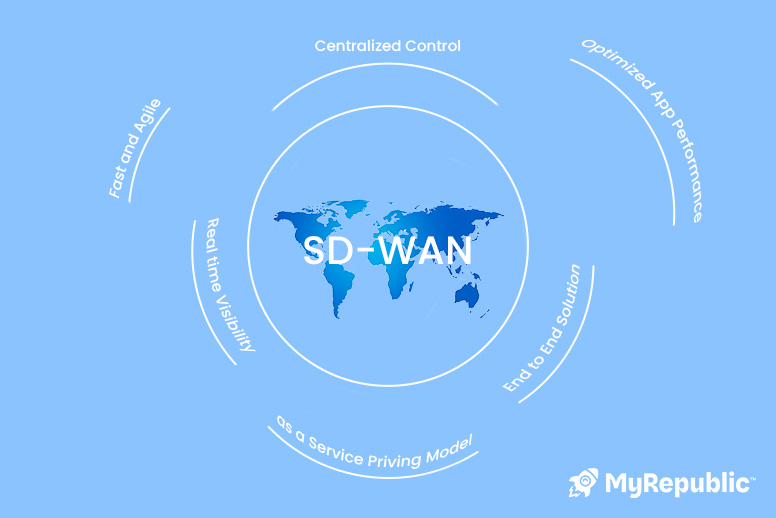
As businesses actively seek to elevate their digital capabilities in the realm of Information and Communications Technology (ICT), the adoption of cutting-edge technologies has become an absolute necessity. Among these transformative technologies, Software-Defined Wide Area Network (SD-WAN) stands out. SD-WAN is a technology that simplifies and enhances the management of WANs used in corporate networks and data centres. It allows for the centralised control of WAN traffic and provides the ability to dynamically route the most effective and cost-saving network traffic. Discover the fundamental steps to effectively implement SD-WAN solutions and fully harness their advantages in this article.
Application edge computing refers to the practice of deploying computing resources, including networking capabilities, processing power, and storage, bringing them closer to the edge of the network where data is generated and consumed. Known as an emerging trend in the ICT industry, the concept holds significant potential for businesses seeking to optimise application performance and user experience, simultaneously bringing applications and services closer to the end-users or devices that require them. However, despite technological advancements, misconceptions surrounding application edge computing still exist. This article will debunk some of the popular myths and clarity on its benefits instead.
Curious how MyRepublic Business can benefit your organisation?
Get in touch with us.
For sales enquiries, drop us a call at +65 6430 0887 (weekdays 9:00am – 6:00pm). Alternatively, fill out the contact form on the right and we’ll respond within three business days.