




- MyRepublic
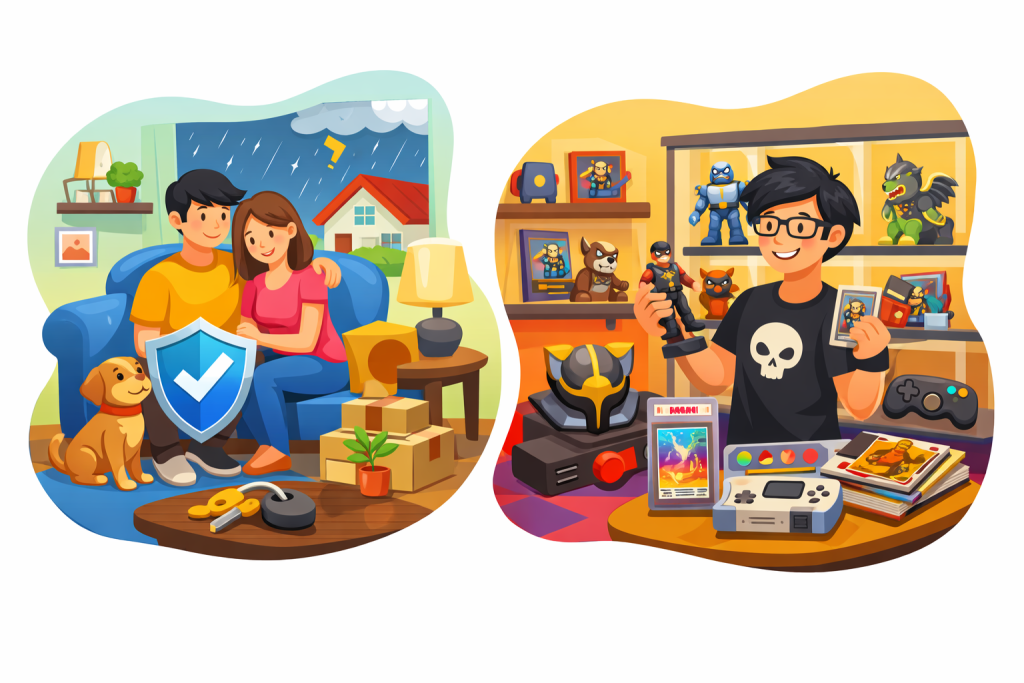
Imagine you’re a condo owner with a custom display cabinet full of figurines in the living room, or a HDB homeowner who’s just finished a major renovation and finally has space to properly show off your collection. Everything looks great, until something unexpected happens. Suddenly, you realise you’re not entirely sure what your insurance actually covers.
For most homeowners in Singapore, your house probably isn’t just filled with a sofa, dining table, and a TV anymore. These days, homes are packed with gaming PCs, NAS drives, limited-edition figurines, graded trading cards, mechanical keyboards, high-end watches, designer handbags, fine jewellery, art pieces, wine or whisky collections, musical instruments, and gadgets that cost more than your month’s salary.
And naturally, there’s a very common assumption:
“I already have home insurance. Everything inside should be covered… right?”
Short answer: not really. Or at least, not in the way most people think.
So, what does home insurance really cover? Let’s take a deep dive into:
- What home insurance is actually designed to cover
- Why expensive tech and collectibles often fall through the cracks
- Where specialised collectibles insurance fits in
If you care about your gear, your collection, or both, this one is worth a read.
What is Home Insurance Designed For?
Home insurance wording is intentionally broad because it’s built to cover the average household, not edge cases like collections, enthusiast setups, or items whose value doesn’t behave like everyday belongings.
At its core, home insurance exists to protect the basics of a household. These are things that are common, replaceable, and expected to lose value over time. Home insurance was never built with gamers, collectors, or tech hobbyists in mind.
- Building structure – walls, ceilings, floors (mainly relevant for landed homes; for HDB flats and most condos, the building structure is typically covered by HDB or the MCST, so individual homeowners usually only insure renovations and contents)
- Renovation & fixtures – built-in cabinets, flooring, bathroom fittings
- Contents – furniture, appliances, everyday household items
The keyword here is everyday.
Home insurance works best for things like:
- Furniture: Sofas, beds, wardrobes
- Household electronics: TVs, refrigerators, washing machines, sound systems, etc
These are mass-market, easy to replace, and expected to depreciate quickly. Home insurance policies are priced and written with that assumption.
What does Home Insurance actually cover and what are the limits?
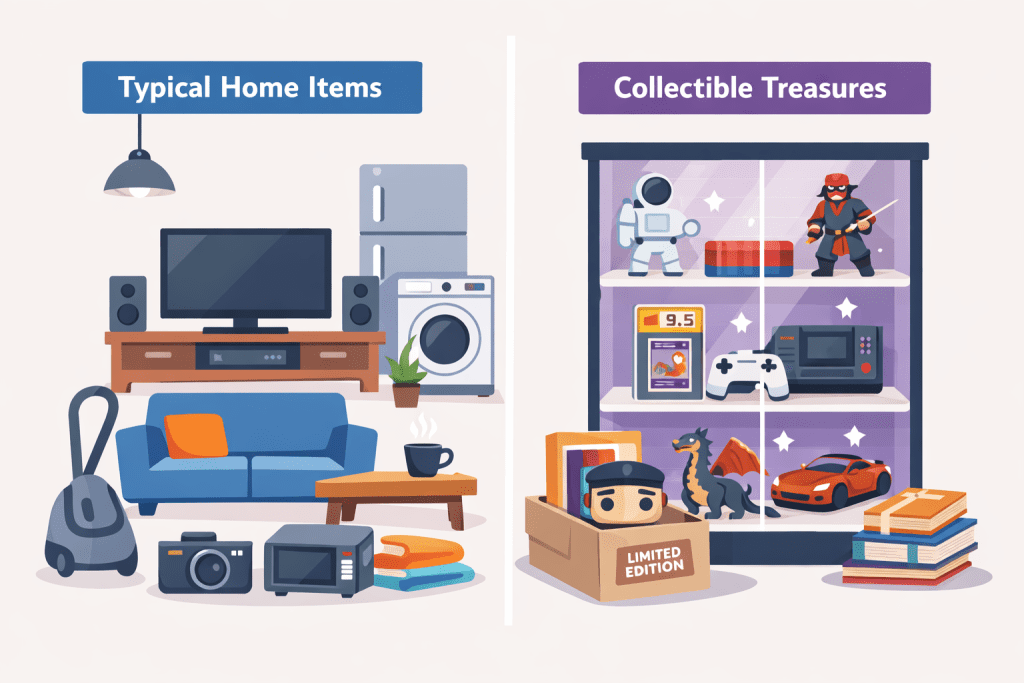
“Contents” sounds like it should mean everything inside your home. In reality, it’s much narrower.
1. Overall contents cap
Most policies have a maximum payout limit for all contents combined. Once that cap is hit, that’s it.
2. Sub-limits per item or category
Even if your total contents sum insured looks high, sub-limits can still apply to individual items or categories. This means that a single high-value item may only be partially covered, regardless of how much overall coverage you’ve purchased.
This is also where a very common misunderstanding happens.
High-value categories like electronics, jewellery, or collectibles often come with strict sub-limits per item. That means: your $8,000 gaming PC might be categorised as “electronics” and the policy may only pay out a fraction of that value.
3. Depreciation is a big deal
Home insurance usually pays based on depreciated value, not what you paid.
In simple terms: the older the item, the more wear-and-tear, and the lower the payout
That RTX GPU you bought two years ago at peak pricing? On paper, it may already be considered “aged”.
Receipts, purchase dates, and condition matter. What else is there in the fine print?
Tech & High-Value Household Items Commonly Underinsured
This is where many homeowners get caught off guard. Your treasured items might be covered, but coverage limits may not match real-world value.
Items that often face low sub-limits
Rather than everyday household electronics, issues usually arise with higher-value or specialised items, such as:
- ○ Often grouped under generic “electronics” categories
- ○ Payouts capped regardless of actual build cost
- ○ Music instruments, cameras, audio gear
- ○ Sometimes excluded or limited due to usage definitions
The key issue here is valuation. When claims involve higher-value items, homeowners often encounter:
- Category-based payout limits
- Depreciation applied regardless of condition
- Disputes over how an item should be classified
Your coverage may technically exist, but not enough to cover the true value of your items.
If anything about your setup is more “enthusiast” than “average household”, home insurance often isn’t built for it.
Collectibles Are a Totally Different Beast
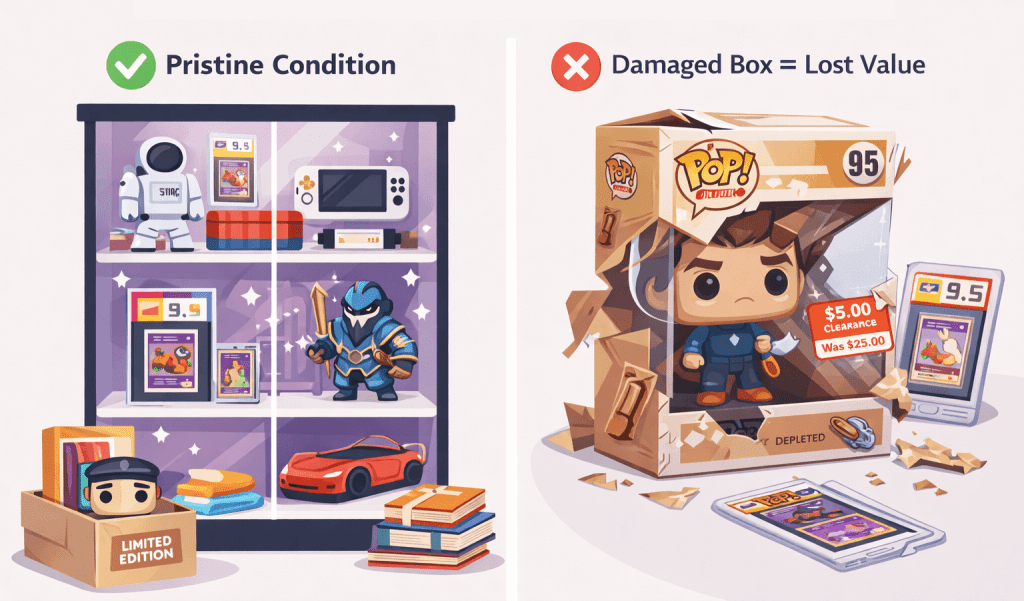
Collectibles don’t behave like normal household items. They don’t depreciate on a neat, predictable curve. Some may even increase in value. On top of that, many collections are built up gradually over months or years, which makes their total value surprisingly easy to underestimate.
- Trading cards (graded and ungraded)
- Figurines, statues, designer toys
- Limited-edition consoles, controllers, or peripherals
- Value appreciation – yesterday’s $500 figure could be $2,000 today
- Condition sensitivity – box damage matters
- Rarity – replacements aren’t sitting on retail shelves
How Geek Insurance for Collectibles Works (In Simple Terms)
Geek Insurance is the first Collectibles insurance in Singapore, and exists because of these exact challenges.Geek Insurance isn’t meant to replace your home insurance. Instead, it’s designed to complement it, by focusing on items that fall outside what standard home insurance is built to protect.
Item-level coverage
Agreed value vs market value
- Agreed value means both sides know what the item is worth upfront
- No surprise depreciation during claims
Coverage typically includes:
- Theft
- Accidental damage
- Fire & water damage
Because collectibles are assumed to be condition-sensitive and non-depreciating, payouts are usually clearer and less painful.
Home Insurance vs Collectibles Insurance: A Quick Comparison
| Feature | Home Insurance | Collectibles Insurance |
|---|---|---|
| Item value limits | Low sub-limits | Item-specific limits |
| Depreciation | Yes | Usually no |
| Proof of value | Receipts, age-based | Agreed or documented value |
| Claims experience | Heavily assessed | More straightforward |
| Best for | Furniture, appliances | Collectibles, selected high-value items |
Who Actually Needs Collectibles Insurance?
Not everyone needs specialised coverage.
But it makes sense if you’re:
- A serious collector, not just the occasional buyer
- A homeowner with display cabinets full of valuable items
- Anyone whose hobby items exceed typical sub-limits
- Building a collection, even if individual items don’t feel expensive on their own
If replacing an item would be painful, whether financially or emotionally, it’s probably worth thinking about.
Common Myths around Home Insurance
“My home insurance covers everything inside my house.”
It covers some things, up to certain limits.
“Collectibles insurance is only for ultra-rich collectors.”
Many collectors don’t realise how quickly value adds up.
“Photos are enough proof for any claim.”
Documentation matters more than most people expect.
Do I need Geek Insurance for my Collectibles?
- What’s the total value of my collectibles?
- How easy would replacement be?
- Is the value sentimental, market-based, or both?


